
If you are planning a Brooklyn move and wondering what movers will refuse to load, there is a clear pattern across the industry. Buy The Hour Movers Brooklyn offers moving and packing services in Brooklyn that follow safety rules and company policies so you know exactly what to pack yourself and what can go on the truck.
What will movers not pack?
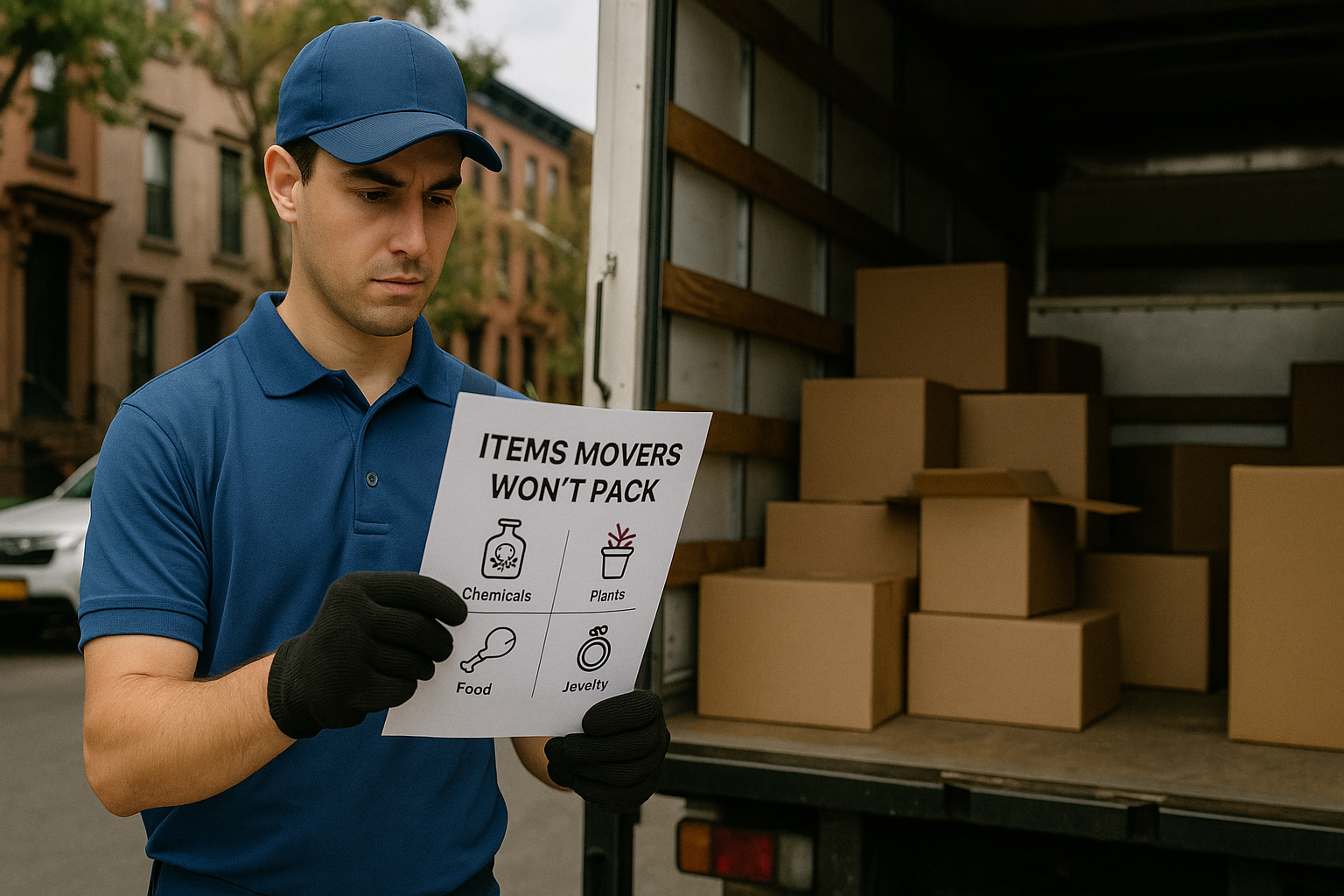
Movers typically will not pack hazardous materials, perishable food, live plants, pets, illegal items or irreplaceable valuables, because these categories create safety, legal or liability risks. Even with full service packing, you should expect to move a short list of items yourself.
In practice, categories that movers usually will not pack or load include:
-
Flammable or explosive products such as gasoline, propane cylinders and fireworks
-
Corrosive or toxic chemicals like certain cleaners, solvents and pesticides
-
Perishable food that can spoil or leak in transit
-
Live plants that will not survive in a closed truck for long periods
-
Weapons, ammunition and illegal substances
-
High value items such as cash, jewelry and critical documents
Federal guidance on moving household goods explains that packing hazardous or perishable items without your mover’s knowledge can limit their liability if something goes wrong. FMCSA+1 Many independent consumer guides also emphasize that movers will not take responsibility for pets or irreplaceable items such as family heirlooms. NerdWallet+1
Before move day, ask your mover for their written list of non allowable items, then separate those belongings so they are never mixed into boxes or rooms the crew will pack.
What items are movers not allowed to transport?
Movers are not allowed to transport items that violate hazardous materials regulations, pose serious safety risks or are illegal to carry, regardless of the customer’s wishes. This includes many flammable, corrosive or explosive products that can endanger the truck, crew and other drivers.
Examples of items movers are typically prohibited from transporting include:
-
Gasoline, lighter fluid, propane tanks and other fuels
-
Fireworks, ammunition and explosive materials
-
Industrial chemicals, strong acids or bases and some batteries
-
Compressed gas cylinders and certain aerosols
-
Biohazardous or medical waste
Federal hazardous materials rules restrict how dangerous goods can be transported on public highways, and moving companies that ignore these rules face penalties and safety risks. FMCSA+1 Industry checklists for non allowable items consistently group flammable materials, toxic chemicals and explosives at the top of the “never on the truck” list. MoveAdvisor+2Nilson Van and Storage+2
If you own products that fall into these categories, plan to use local hazardous waste facilities or specialized disposal programs rather than trying to move them in a household goods shipment.
Hazardous materials movers cannot load
Hazardous materials are the clearest category of items movers cannot pack or load, because they can ignite, explode, leak or create toxic fumes inside a closed truck. Even small containers of certain products are treated as prohibited.
Common household hazardous materials that movers will not take include:
-
Paints, stains, paint thinners and solvents
-
Propane tanks, charcoal lighter and camp stove fuel
-
Motor oil, gasoline and other automotive fluids
-
Pesticides, herbicides and many strong cleaning chemicals
-
Pool chemicals and similar oxidizers
-
Pressurized spray cans and some aerosols
Consumer and financial guides that review moving safety note that even everyday items like bleach, nail polish remover and certain detergents can fall under “no move” policies when they are flammable or reactive. NerdWallet+1
If you have large quantities of these products in a Brooklyn home, schedule a separate cleanup before you pack. Many New York City residents use local sanitation department programs or retail take back options to dispose of leftover chemicals safely.
Can movers pack cleaning supplies or chemicals?
Movers generally do not pack many household chemicals, especially flammable or corrosive cleaning supplies, because they can leak, react or ignite during transport. Mild products in sealed containers may be allowed, but anything hazardous is usually excluded from the shipment.
Typical treatment for cleaning products looks like this:
-
Strong chemicals such as bleach, ammonia and oven cleaner are usually on the prohibited list
-
Flammable liquids like alcohol based cleaners or solvents are not allowed on the truck
-
Mild, sealed products such as unopened dish soap or laundry detergent may be accepted at the mover’s discretion
-
Open containers of any kind are usually refused
Articles on non allowable moving items explain that hazardous household substances are grouped with other dangerous goods that movers will not load, because a leak or reaction could damage the entire shipment. NerdWallet+1
If you want to keep some cleaning supplies, transport small quantities yourself in well sealed containers, secured upright in your own vehicle, and never on the moving truck.
Do movers pack food, plants or perishables?
Movers typically do not pack or transport perishable food, live plants or anything that needs refrigeration, because these items can spoil, attract pests or die in the closed environment of a truck. Dry pantry goods may be allowed, but fresh or frozen items are almost always excluded.
What this usually means for your kitchen and yard:
-
Fresh produce, open dairy products and items from the refrigerator or freezer will not be moved
-
Frozen foods and anything that must stay cold are considered perishable, even in sealed packaging
-
Open containers that can leak or spill are not accepted
-
Live plants and potted trees are treated as perishable, especially on long distance moves
Consumer moving guides stress that perishable items can quickly spoil in warm trucks and may damage other belongings or create pest problems, which is why movers list them as non allowable. HomeTriangle+1
For local Brooklyn moves, you may be able to move small amounts of food in a cooler in your car on the same day. Plants are best transported in your own vehicle or entrusted to friends if the travel time or weather conditions are not ideal.
Valuables and personal documents you should move yourself
High value items and critical personal documents are not strictly hazardous, but many movers either exclude them from transport or recommend that customers move them personally. This reduces disputes over value and ensures sensitive information stays under your control.
Items you should always plan to move yourself include:
-
Cash, jewelry and small collectibles
-
Passports, birth certificates and immigration documents
-
Financial records, checkbooks and tax files
-
Medical records and prescription medications
-
Laptops, hard drives and backup devices with important data
Lists of things movers will not move often highlight “irreplaceable items” as a separate group from hazardous and perishable goods, because damage or loss cannot easily be compensated, even with insurance. This Old House+1
Pack these items in clearly labeled bags or small containers that stay with you during the move, whether you are relocating within Brooklyn or heading to another state.
Should I move valuables and important documents myself?
You should always move valuables and important documents yourself, rather than placing them on the truck, even if your mover does not explicitly forbid them. Keeping these items with you reduces loss risk and avoids complex claims if something goes missing.
Practical steps include:
-
Creating a “critical documents” folder with IDs, financial papers and medical records
-
Using a small lockable case or backpack for jewelry, small electronics and sensitive items
-
Transporting prescription medications in your own bag, not in packed boxes
-
Keeping these bags with you in your car, rideshare or carry on if you are flying
Consumer protection resources recommend that you never sign a delivery receipt that releases the mover from liability if anything valuable is missing before you have checked your shipment, and moving fraud investigations show that disputes over high value items are both common and difficult to resolve. FMCSA+2Office of Inspector General+2
Treat valuables and documents as non negotiable “carry with me” items and plan around them from your first packing checklist.
Local rules Brooklyn movers follow about restricted items
Brooklyn movers follow the same federal and state rules on hazardous and prohibited items as companies elsewhere, but they also operate inside dense neighborhoods with specific building and city regulations. That combination makes advance planning especially important.
Typical local considerations include:
-
Building management rules that ban certain materials in freight elevators or loading docks
-
Co op or condo policies that require written move plans and coverage details
-
New York City fire and sanitation codes that affect how hazardous materials are stored and discarded
-
Tight curb space and shared hallways that limit where boxes can be staged
Neighborhoods like Bed Stuy, Crown Heights, Bushwick, Williamsburg, Brooklyn Heights and Park Slope often have older buildings with limited access and strict move windows. In these areas, separating non allowable items well before move day prevents last minute delays in narrow stairwells or freight elevators.
When you request a quote, ask your mover to confirm in writing which items they will not pack or load and how they want you to handle them in buildings across Brooklyn, Queens and nearby Manhattan.
How to prepare no pack items before moving day
Preparing no pack items early makes the rest of your packing much simpler, because crews and family members can see exactly what must stay off the truck. Instead of treating these items as an afterthought, give them their own mini project.
A simple preparation plan looks like this:
-
Create a master non allowable list
-
Use your mover’s list plus your own valuables and document categories
-
-
Walk your home room by room
-
Pull hazardous products, perishable foods, plants and valuables into separate areas
-
-
Label clear “do not pack” zones
-
Use shelves, closets or specific counters for items the crew should avoid
-
-
Arrange disposal or alternative transport
-
Schedule hazardous waste drop offs and plan car space for valuables and perishables
-
-
Confirm with your mover
-
Review the plan during the pre move call or walk through
-
Detailed guides to moving non allowable items suggest writing “Do Not Pack” on boxes, cabinets or closets that will hold hazardous or reserved items so that packers never have to guess. acemw.com+1
If you live in a shared building in Downtown Brooklyn, Fort Greene or Clinton Hill, think about where you will temporarily store these items so they do not obstruct hallways or violate building rules while the rest of the home is packed.
Safe alternatives for transporting restricted belongings
Just because movers will not pack or load certain items does not mean you must throw everything away. The key is to separate what should be kept from what should be discarded, then choose transport methods that match each category.
Safe alternatives include:
-
Hazardous materials
-
Take sealed containers to city approved hazardous waste sites
-
Ask retailers if they have take back programs for paints or chemicals
-
-
Perishable foods
-
Use up refrigerated and frozen foods before move week
-
Donate unopened shelf stable items to local food pantries
-
-
Plants
-
Move short distances in your own car, with pots secured and protected
-
Give larger or delicate plants to friends if travel time is long
-
-
Valuables and documents
-
Carry them yourself or use secure shipping with tracking and insurance
-
Consumer home and moving publications provide step by step advice on when and how to dispose of hazardous materials and perishable goods safely, emphasizing that the risk and effort of moving them usually outweigh any savings from keeping half used containers. acemw.com+1
For Brooklyn residents without a car, consider asking a friend with a vehicle to help with hazardous waste drop offs and plant transport, or schedule these tasks as part of a car share booking before the movers arrive.
Ask Buy The Hour Movers what they will and will not pack
Every moving company uses the same broad categories of non allowable items, but each may have specific rules or preferences. The simplest way to avoid surprises is to review your situation with a local company that knows Brooklyn housing types well.
Buy The Hour Movers Brooklyn provides moving and packing services in Brooklyn and surrounding neighborhoods, and their crews regularly work in walk ups, brownstones and elevator buildings across the borough. buythehourmovers.com+1
Related services that can be useful when you are planning around restricted items include:
-
Moving labor help in Brooklyn for loading or unloading when you are driving a rental truck
-
Local moving in Brooklyn when you are relocating within the borough or to nearby Queens and Manhattan
-
Commercial moving in Brooklyn if you are planning an office move with equipment that has its own restrictions
Knowing upfront which items will not be packed or loaded lets you focus moving day energy on the belongings that can go on the truck, instead of negotiating exceptions at the last minute.
Frequently Asked Questions
Do movers in Brooklyn ever make exceptions for hazardous items?
Professional movers rarely make exceptions for hazardous items, because they must follow the same safety rules for every shipment, so any request to move fuel, explosives or strong chemicals is almost always refused.
Can I put small propane cylinders or lighter fluid in regular moving boxes?
You should never place propane cylinders, lighter fluid or similar fuels in moving boxes, because even small leaks or pressure changes can create fire or explosion risks inside a closed truck.
Are unopened pantry items safe for movers to pack?
Unopened, shelf stable pantry items like canned goods and boxed dry foods are often acceptable, but you should confirm with your mover and avoid overloading boxes, since food weight can quickly make cartons too heavy.
How should I handle open paint cans before moving?
Open paint cans are considered hazardous, so you should not put them on the truck, and instead you can dry out small quantities with absorbent materials or take larger amounts to a local hazardous waste facility for disposal.
Can movers take my home safe if it contains documents or jewelry?
Movers may move an empty safe as furniture, but they generally will not accept responsibility for a safe that contains cash, jewelry or critical documents, so you should empty it and carry those contents yourself.
What is the best way to move important digital data?
Important digital data should be backed up in at least two forms, such as an encrypted cloud backup and a physical drive you carry with you, rather than relying on a single computer or disk packed on the moving truck.
Should I tell the movers about non allowable items even if I will move them myself?
It is useful to tell movers which areas hold non allowable items you will handle yourself, so crews know which shelves, cabinets or closets are off limits and can avoid accidental packing of restricted belongings.
Schedule a Brooklyn move that avoids restricted item problems
If you want moving day in Brooklyn to run smoothly, start by listing hazardous, perishable and high value items that movers will not pack, then plan how to dispose of or personally move each group. This keeps your shipment safe, legal and easier to insure.
Once your non allowable items are under control, you can focus on the services you do need, such as moving and packing support in Brooklyn, local moving within Brooklyn and nearby boroughs or labor only help for loading and unloading. When you are ready to schedule, use the contact page for Buy The Hour Movers Brooklyn to request a written quote that clearly lists what they will and will not pack for your next move.